Fable 5 Cannot Save Your Bad Harness
Claude Fable 5 is here, and the headline is easy.
Anthropic says it is their most capable widely released model. Better at long-horizon work. Better at agentic tasks. Bigger context. Bigger outputs. Adaptive thinking on by default.
Cool.
I want better models. I will use better models.
But Fable 5 is not going to save a bad setup.
A smarter model is still a model.
If you drop it into a weak harness, you get expensive chaos with better grammar.
If your workflow is shit, Fable 5 will not make it mature. It will just produce smarter-looking shit.
That is the part people keep wanting model releases to solve for them.
They will upgrade the model, keep the same vague prompt, same stale context, same missing checks, same messy tool permissions, same "looks good ship it" review process, and then act surprised when the output is still unreliable.
That is not a model problem.
That is a harness problem.
Fable 5 Is Probably Very Good
This is not an anti-model take.
Fable 5 looks strong on paper. Anthropic says it is built for demanding reasoning and long-horizon agentic work. The API docs list a 1M token context window by default, up to 128k output tokens, and always-on adaptive thinking. The launch also sits next to Mythos 5, with Fable 5 as the widely released version and Mythos 5 limited through Project Glasswing.
There is also the Opus 4.8 wrinkle. For some sensitive cybersecurity, biology, and chemistry cases, Fable 5 can route down to Opus 4.8 through safeguards. That does not mean Fable 5 is secretly only Opus 4.8 with loops. The public docs describe it as a new Mythos-class release.
The useful point is simpler:
"Most capable model" does not mean "your system is capable."
A model release can raise the ceiling. It cannot magically write your standards, clean your inputs, protect your data boundaries, or decide what "done" means in your product.
That work still belongs to you.
Annoying, I know.
Your Harness Is The Thing
When I say harness, I mean everything around the model.
The prompt is part of it.
The context is part of it.
The file tree, tools, permissions, examples, memory, workflows, loops, tests, evals, review gates, and stop conditions are all part of it.
That is the system the model actually lives inside.
This is why the same model can feel brilliant in one environment and useless in another. In one setup, it has the right files, clear constraints, a small plan, relevant tools, a verifier, and permission to keep working until the check passes. In another setup, it gets a paragraph of vibes and a prayer.
Same model class.
Different harness.
Different outcome.
Prompt engineering was the first layer. You learned how to ask better.
Context engineering came next. You learned that the model cannot reason over facts it never sees.
Harness engineering is the layer that matters when the model starts doing work. You are no longer asking for one answer. You are giving the model a workspace and letting it act.
At that point, the question is not "how smart is the model?"
The question is "what system did you put the model inside?"
Loops Are Part Of The Harness
Loops matter. A lot.
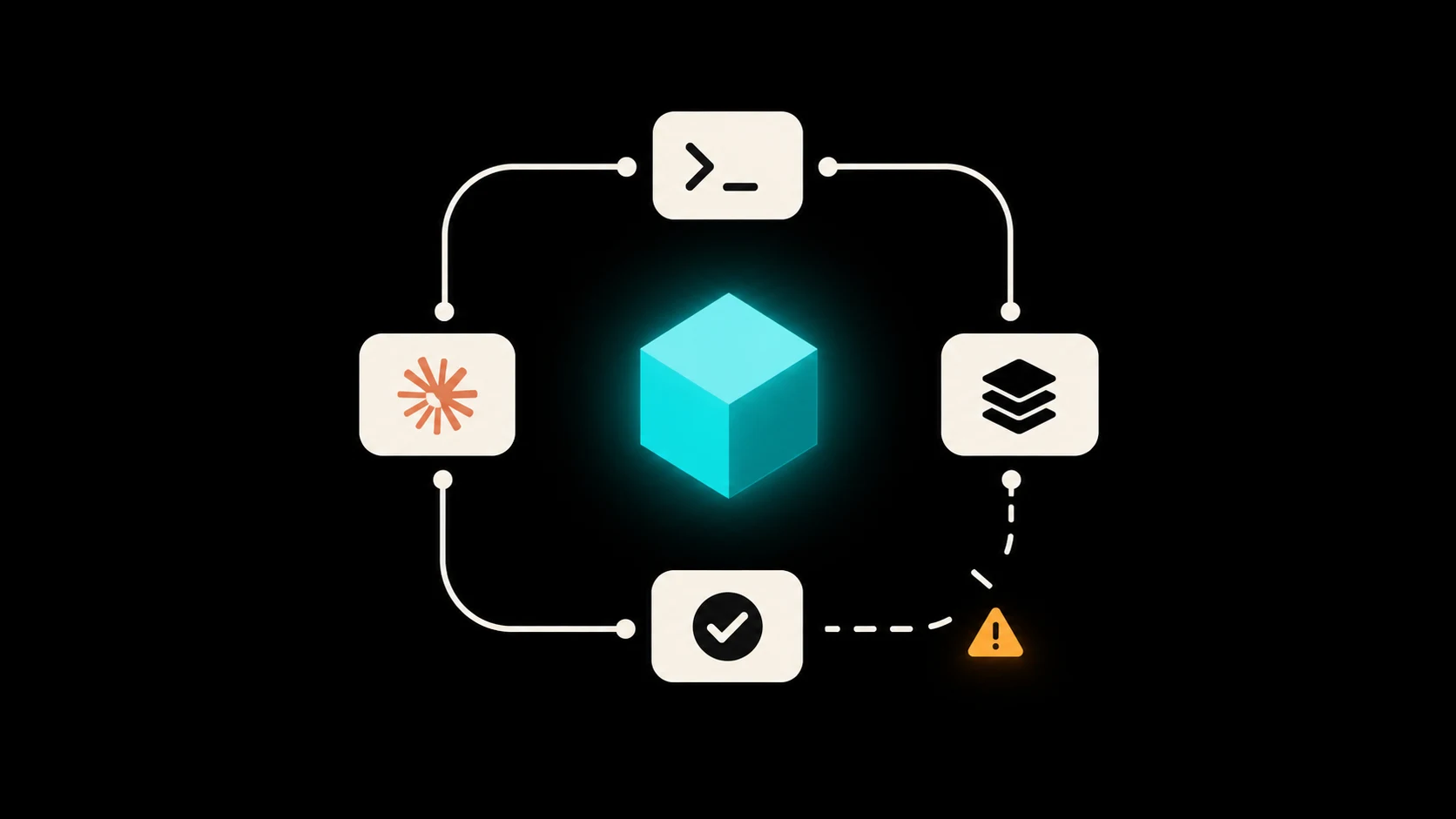
A basic working loop looks like this:
Read the task.
Load the relevant context.
Make a small plan.
Take one action.
Inspect the result.
Update the plan.
Run the check.
If the check fails, diagnose and try again.
If the check passes, summarize the evidence.
Stop when the acceptance criteria are met.
That loop can make a model feel much less needy.
But a loop is not magic either.
If the loop reads bad context, it loops on bad context.
If the verifier is weak, it verifies nonsense.
If the stop condition is vague, the model stops when the answer feels complete, which is exactly how you get a confident summary of unfinished work.
Loops are powerful because they let the model continue. That also means a bad loop gives the model more chances to compound the mistake.
This is why I do not like treating "autonomy" as a model-picker setting.
Autonomy is model plus harness.
The model supplies reasoning.
The harness supplies direction, boundaries, memory, tools, proof, and brakes.
Skip the harness work and your autonomous agent becomes a very polite random walk.
What A Bad Harness Does
A bad harness does not always fail loudly.
That is what makes it dangerous.
A vague task makes the model guess your intent.
Stale context makes it optimize the wrong version of the system.
Missing examples make it invent style.
Loose tool permissions make it either freeze or overreach.
No acceptance criteria make it declare victory at the first plausible stopping point.
No tests make it review its own story instead of the behavior.
No memory discipline makes it rediscover the same facts every session.
No fallback path makes one failed tool call turn into a fake conclusion.
Put Fable 5 inside that and yes, it will probably do better than a weaker model.
But the shape of the failure stays the same.
It will still be guessing.
It will just guess with better reasoning.
What To Build Instead
Before you upgrade the model, upgrade the workbench.
For any serious AI workflow, write down the boring pieces:
Task: what is the model trying to finish?
Inputs: what files, docs, examples, and data matter?
Rules: what constraints should never be violated?
Tools: what can it call, and what needs approval?
Workflow: what steps should it run before editing or answering?
Verifier: what proves the work is correct?
Budget: how long can it keep trying?
Fallback: what should it do when it gets blocked?
Memory: what should survive into the next run?
Stop: when is the task done?
A useful content harness might have sources, examples, voice rules, draft stages, fact checks, AI-tell audits, and publish criteria.
A useful coding harness might have repo instructions, scoped file rules, test commands, fixtures, review rubrics, security boundaries, and a verifier that reads the diff instead of trusting the summary.
A useful research harness might have source rules, contradiction checks, confidence labels, citation requirements, and a rule that search-result snippets do not count as evidence.
None of this is glamorous.
It is also the difference between "the model wrote something impressive" and "the system did the work."
The harness is where your standards live.
The workflow is where your judgment gets repeated.
The loop is where the model learns to keep moving without you typing "continue" like a tired supervisor.
The Actual Fable 5 Takeaway
Use Fable 5 if it helps.
Use the best model you can justify for the job.
But do not outsource discipline to the model release cycle.
A better model raises the ceiling.
A better harness raises the floor.
Most teams need the floor more than they need another ceiling.
Because the embarrassing failures rarely happen because the model was one benchmark point too low. They happen because nobody wrote down the workflow, nobody gave the model the right context, nobody defined done, and nobody checked the output against reality.
Fable 5 can make a strong harness better.
It cannot save a sloppy one.
If your harness is shit, fix the harness.
Then the model upgrade actually has somewhere to land.
Sources: Anthropic's Claude Fable 5 and Claude Mythos 5 announcement, Claude API docs for Fable 5 and Mythos 5, Prompting Claude Fable 5, Claude models overview, and Anthropic's Opus 4.8 announcement.
Tagged